Dr. Gaurav Patel, M.D.
Medical Doctor (M.D.)
Physician on our team who completes ESA evaluations and helps patients understand how their letter works for housing.
Mental health professionalIdaho's rental market has changed fast, from new apartment complexes in Meridian and Nampa to tight college-town housing in Moscow and Rexburg. If an emotional support animal or psychiatric service dog is part of your mental health care, we connect you with an Idaho-licensed mental health professional for an honest evaluation.
Medically reviewed by Dr. Johnathan Miller, M.D.Updated October 9, 2026
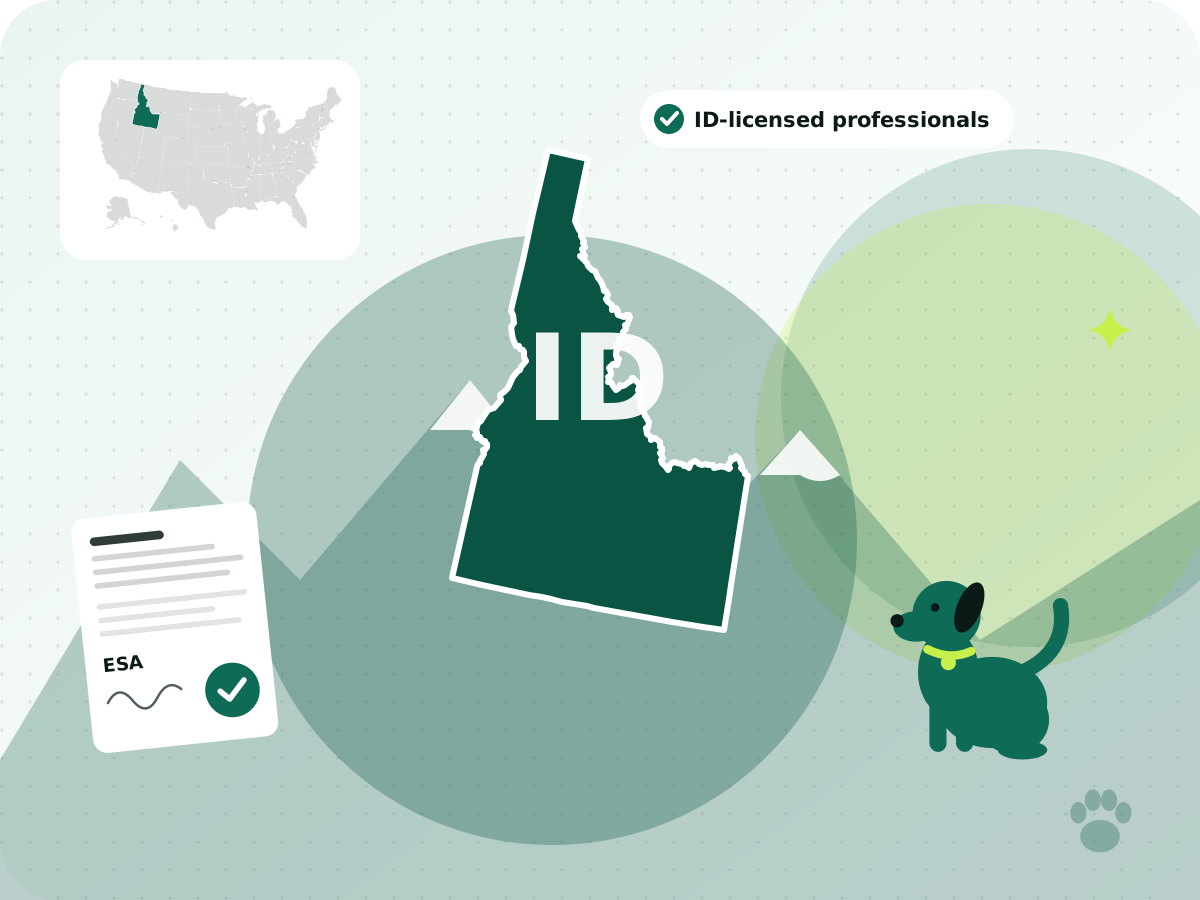
The Idaho Human Rights Act (Idaho Code Title 67, Chapter 59, with housing covered in Idaho Code 67-5909) prohibits disability discrimination in real estate transactions. Complaints go to the Idaho Human Rights Commission, which investigates housing discrimination statewide. Idaho's housing provision is narrower than federal law in some respects; it expressly addresses reasonable modifications to a home, while questions about waiving a no-pets rule are generally analyzed under the federal Fair Housing Act.
That federal piece has changed in practice. The U.S. Department of Housing and Urban Development (HUD) has withdrawn its 2020 and 2013 assistance animal notices (FHEO-2020-01 and FHEO-2013-01), effective September 17, 2025, and its May 22, 2026 enforcement memo limits federal enforcement to animals individually trained to perform disability-related tasks. The Fair Housing Act and HUD's regulations were not amended, and individuals can still bring private lawsuits, generally within two years. But for Idaho renters with an untrained emotional support animal, there is now less certainty, and a clear, well-supported letter from a licensed mental health professional matters more than ever.
Many Idaho landlords still choose to approve assistance animals as a reasonable accommodation. When they do, the animal is not a pet, so pet fees and pet deposits generally should not be charged for it, while you remain responsible for any actual damage. Narrow denial reasons include a specific animal posing a direct threat, an undue burden, or exempt housing such as some small owner-occupied buildings.
We did not find an Idaho statute that creates special emotional support animal documentation rules, such as a required waiting period, state form or relationship length. Your letter is reviewed under general reasonable accommodation principles. A credible letter from an Idaho-licensed mental health professional typically includes:
Idaho does criminalize faking disability status to get treatment as a person with a disability. Idaho Code 18-5811A makes it a misdemeanor for a person without a disability to use an assistance animal or service dog in an attempt to gain treatment or benefits as an individual with a disability. Buying a vest or an online ID card does not create any legal status, and we do not sell them.
Idaho housing looks very different depending on where you are, and each setting has its own practical considerations:
Long winters in much of Idaho also mean landlords may care about snow-season care, leash rules and yard use. Offering a clear plan for your animal's care often makes the conversation easier.
Idaho's service dog laws, found in Idaho Code Title 56, Chapter 7, protect the rights of people with service dogs in public places, alongside the Americans with Disabilities Act. A service dog is individually trained to perform tasks for a person with a disability, and businesses may ask only whether the dog is needed for a disability and what task it performs. A psychiatric service dog's right to enter public places comes from its training, not from a letter or certificate.
A PSD letter from an Idaho-licensed mental health professional still has real uses. It documents your disability-related need when you ask a landlord for an accommodation, and it can support the U.S. Department of Transportation service animal form that airlines require for trained service dogs. Emotional support animals have not been accommodated in airline cabins since the 2021 federal rule change.
ESA letters are $129 for up to two animals ($199 for three or more). Letters never disclose your diagnosis, and you receive a full refund if your mental health professional determines you do not qualify. Book online 24 hours a day.
If a housing provider refuses a reasonable accommodation without a valid reason, you can contact Idaho Human Rights Commission, a local fair housing organization, or a housing attorney. Deadlines apply, so act promptly.
Last reviewed: October 9, 2026. Laws change; this page is general information, not legal advice.
There is no official national ESA registry, and online “registrations,” ID cards and certificates carry no legal weight. Registering your emotional support animal with your housing provider means giving them reliable documentation and a written accommodation request.
Every ESA evaluation for Idaho residents is completed by a mental health professional licensed in the patient’s state, after a genuine telehealth evaluation.
Medical Doctor (M.D.)
Physician on our team who completes ESA evaluations and helps patients understand how their letter works for housing.
Mental health professionalMedical Doctor (M.D.)
Physician on our team who completes ESA evaluations and explains each patient's documentation and next steps clearly.
Mental health professionalEach pin sits on the city’s real location, and each list entry shows the outline of its county. Because the visit happens by video or phone, the ID-licensed professional you meet can help you just the same in Boise as in Moscow, or anywhere in between.
The Idaho Human Rights Act, codified in Idaho Code Title 67, Chapter 59, includes housing protections in Idaho Code 67-5909. The Idaho Human Rights Commission investigates complaints. The federal Fair Housing Act also applies across the state.
We did not find an Idaho law setting special ESA documentation rules, waiting periods or state forms. Requests are generally evaluated under reasonable accommodation principles, mostly under federal law.
HUD has withdrawn its 2020 and 2013 assistance animal notices, and its May 22, 2026 enforcement memo limits federal enforcement to individually trained animals. The Fair Housing Act was not amended and private lawsuits remain possible, but Idaho renters with untrained ESAs now have less certainty, so many simply make a clear written request with a strong letter.
Idaho Code 18-5811A makes it a misdemeanor for a person without a disability to use an assistance animal or service dog to try to gain treatment or benefits as a person with a disability. Never present an ESA as a trained service dog.
It can. Homeowners associations may enforce pet rules, and fair housing laws can apply to them. Give a copy of your request to your landlord and ask whether it needs to go to the association as well.
Both schools review accommodation requests for university housing through their own processes. Contact disability services early in the term, since documentation from a licensed mental health professional is typically requested.
Students in Rexburg should follow the accommodation process used for university-approved housing and talk with the school's accessibility office. A licensed mental health professional's letter is the kind of documentation such offices usually ask for.
Contact the Idaho Human Rights Commission. Idaho's state complaint deadline is one year from the discriminatory act, and you can also seek help from regional fair housing organizations.
If your Idaho-licensed mental health professional approves you, your letter can be delivered the same day. Your landlord still needs time to review the request, and approval by the landlord is not automatic.
Short-term and vacation rentals may be treated differently from long-term housing, and ESAs have no public access rights. Ask the host before booking.
If your landlord approves your animal as a reasonable accommodation, it is not a pet, and pet fees or deposits generally should not be charged. You still owe for any actual damage the animal causes.
No. Public access comes from your dog's individual task training under the ADA and Idaho Code Title 56, Chapter 7. A PSD letter documents need for housing and helps with the airline DOT form.
No. We do not sell vests, certificates, ID cards or registrations, which have no legal effect in Idaho or under federal law.
Approval is never promised because it depends on a genuine clinical evaluation. If your mental health professional determines you do not qualify, you receive a full refund.
Pick a time that suits you; booking is open 24/7.
About 10 minutes of questions about how you’ve been feeling.
Video or phone. Your signed letter by email right after the call, if you qualify.
From$129up to 2 animals · $199 for 3 or more
Book my evaluationCheck if I qualify firstA Idaho-licensed mental health professional makes the decision after a real evaluation. If you don’t qualify, you get a full refund.
Keep reading
Answer five quick questions to see whether an ESA evaluation is a good next step. It takes about a minute and nothing is saved.