Dr. Gaurav Patel, M.D.
Medical Doctor (M.D.)
Physician on our team who completes ESA evaluations and helps patients understand how their letter works for housing.
Mental health professionalWhether you rent near OU in Norman, in a Tulsa apartment complex or on a few acres outside Lawton, Oklahoma renters with mental health conditions can ask a landlord to allow an emotional support animal. We connect you with an independent mental health professional licensed in Oklahoma who will evaluate your situation honestly.
Medically reviewed by Dr. Johnathan Miller, M.D.Updated October 9, 2026
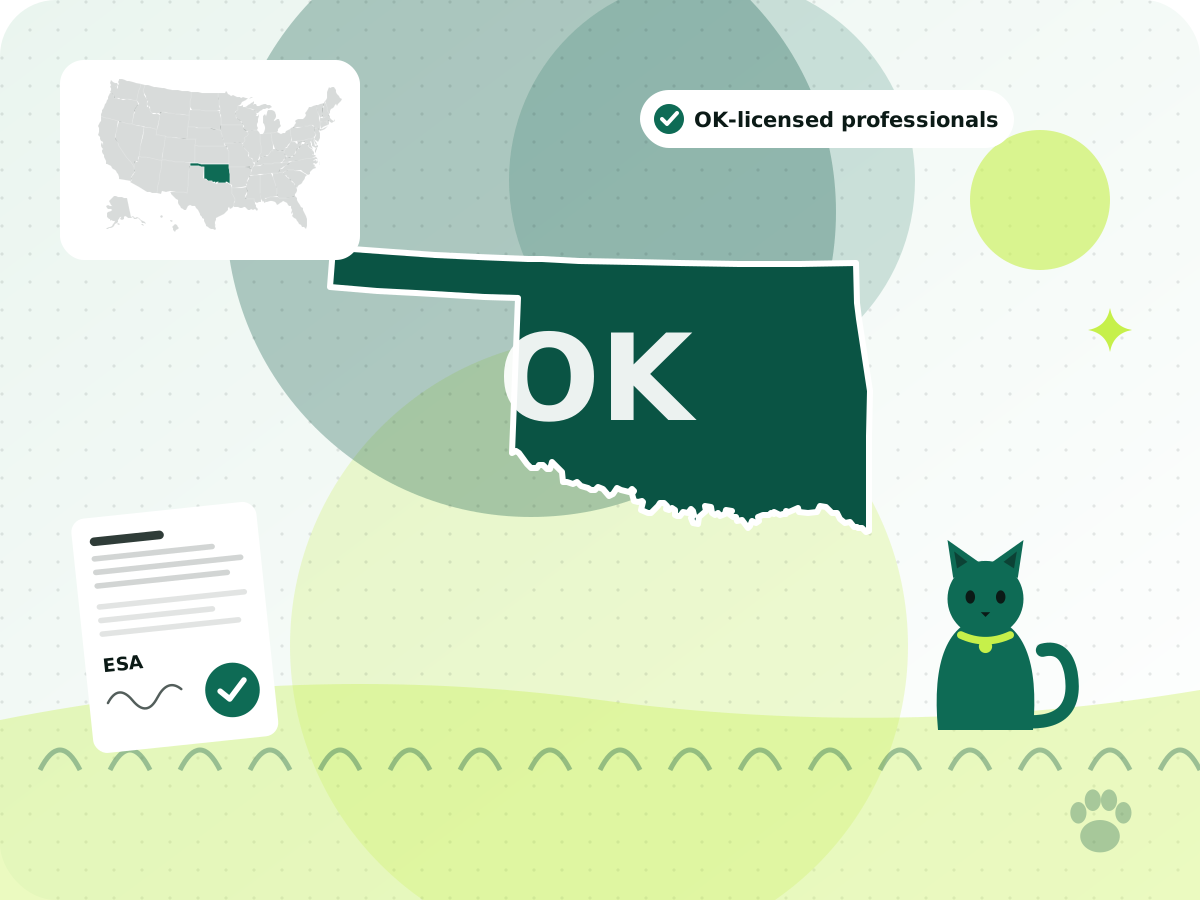
Oklahoma's Anti-Discrimination Act (Title 25 of the Oklahoma Statutes, §§1101-1706, with housing provisions beginning at §1451) prohibits discrimination in housing, and it works alongside the federal Fair Housing Act, which bars disability discrimination and requires housing providers to make reasonable accommodations. For a renter with a mental health disability, that can mean an exception to a no-pets policy or to pet size and breed limits for an emotional support animal.
Housing complaints are handled by the Office of Civil Rights Enforcement (OCRE) within the Oklahoma Attorney General's Office. According to the OCRE, a housing discrimination complaint must be filed within one year of the last alleged discriminatory act. Tenants can also file with HUD or bring a private lawsuit.
Federal enforcement shifted in 2026. On May 22, 2026, HUD issued a memo confirming the withdrawal of its 2020 assistance-animal guidance (FHEO-2020-01) and saying HUD will focus federal cases on animals trained to perform disability-related tasks. That memo did not change the Fair Housing Act or Oklahoma's statutes, and private lawsuits remain available, but Oklahoma landlords may now question untrained ESAs more often. Documentation from a licensed mental health professional who actually evaluated you carries real weight.
Oklahoma does not have an ESA-specific statute that imposes a waiting period or a minimum treatment relationship. A 2018 law (House Bill 3282) addressed landlords' ability to request reliable supporting documentation for assistance animals in housing when the disability or need is not obvious. Since there is no state waiting period, your Oklahoma letter can be issued the same day your mental health professional approves you.
Oklahoma did tighten its service animal rules in 2025. House Bill 1178 became law after the Legislature overrode the governor's veto and took effect November 1, 2025. It clarifies that only animals trained to perform tasks for individuals with disabilities qualify as service animals and makes it a misdemeanor to falsely represent a pet as a service animal to gain access or benefits. Emotional support animals are not service animals, so they should never be presented as one in a store, restaurant or hotel.
A solid Oklahoma ESA letter includes the mental health professional's name, license type, Oklahoma license number, the date, a statement that you have a disability and a disability-related need for the animal, and contact information so the landlord can verify it. It does not have to name your diagnosis.
Oklahoma City and Tulsa have many large apartment communities run by management companies with formal accommodation request processes, and suburbs such as Edmond, Broken Arrow and Moore have newer HOA neighborhoods with pet restrictions that can be modified as a reasonable accommodation.
College towns are a big part of the market. The University of Oklahoma in Norman, Oklahoma State University in Stillwater, the University of Tulsa and the University of Central Oklahoma in Edmond each have their own process for animals in residence halls, usually through accessibility or disability resources. Students renting off campus use the ordinary landlord request process.
Military housing is common near Fort Sill in Lawton, Tinker Air Force Base in Midwest City, Vance in Enid and Altus Air Force Base. Privatized base housing has its own accommodation process. Much of eastern and central Oklahoma lies within the reservations of tribal nations such as the Cherokee, Muscogee (Creek), Chickasaw, Choctaw and Seminole Nations, and tribal housing programs may have their own rules, so ask the housing authority how it handles disability accommodations.
Oklahoma also sits in tornado alley. Many renters live in older homes, duplexes and manufactured housing communities, so ask whether there is a storm shelter you and your animal can use, and keep a carrier, leash and supplies ready during storm season.
Under the ADA and Oklahoma law, a service animal is a dog trained to perform tasks for a person with a disability. A psychiatric service dog might interrupt a panic attack, guide a handler out of a stressful situation or remind them to take medication. Its public access rights come from that training. A letter does not grant public access, and after HB 1178 misrepresenting a pet as a service animal is a misdemeanor in Oklahoma.
A PSD letter from an Oklahoma-licensed mental health professional documents your disability-related need for a trained service dog. It helps with housing requests and with the U.S. DOT Service Animal Air Transportation Form for flights from Will Rogers in Oklahoma City or Tulsa International. Airlines have not been required to accept emotional support animals since 2021.
If a housing provider refuses a reasonable accommodation without a valid reason, you can contact Oklahoma Office of the Attorney General, Office of Civil Rights Enforcement, a local fair housing organization, or a housing attorney. Deadlines apply, so act promptly.
Last reviewed: October 9, 2026. Laws change; this page is general information, not legal advice.
There is no official national ESA registry, and online “registrations,” ID cards and certificates carry no legal weight. Registering your emotional support animal with your housing provider means giving them reliable documentation and a written accommodation request.
Every ESA evaluation for Oklahoma residents is completed by a mental health professional licensed in the patient’s state, after a genuine telehealth evaluation.
Medical Doctor (M.D.)
Physician on our team who completes ESA evaluations and helps patients understand how their letter works for housing.
Mental health professionalMedical Doctor (M.D.)
Physician on our team who completes ESA evaluations and explains each patient's documentation and next steps clearly.
Mental health professionalEach pin sits on the city’s real location, and each list entry shows the outline of its county. Because the visit happens by video or phone, the OK-licensed professional you meet can help you just the same in Oklahoma City as in Stillwater, or anywhere in between.
Oklahoma's Anti-Discrimination Act (Title 25 of the Oklahoma Statutes, with housing provisions beginning at §1451) prohibits discrimination in housing, and the federal Fair Housing Act bars disability discrimination and requires reasonable accommodations. Together they allow tenants to request an ESA despite a no-pets rule.
The Office of Civil Rights Enforcement in the Oklahoma Attorney General's Office. It says housing complaints must be filed within one year of the last discriminatory act. You can also file with HUD.
HB 1178, which became law over the governor's veto and took effect November 1, 2025, clarifies that only task-trained animals are service animals and makes it a misdemeanor to falsely represent a pet as a service animal. It does not turn ESAs into service animals or give them public access.
No. Oklahoma has no law requiring a waiting period or minimum relationship, so your letter can be issued the same day once your Oklahoma-licensed mental health professional approves you.
Yes, when your disability or need isn't obvious, a landlord may ask for reliable supporting documentation of your disability and your disability-related need for the animal. They may not demand your diagnosis or medical records.
HUD has withdrawn its 2020 ESA guidance and said it will focus federal enforcement on task-trained animals. The Fair Housing Act and Oklahoma law weren't amended, but landlords may push back more, so a legitimate clinical evaluation matters.
The University of Oklahoma and Oklahoma State University each have their own process for animals in campus housing. Contact the accessibility office early, and expect to submit documentation and sign an animal agreement.
Privatized military housing has its own reasonable accommodation process. Ask the housing office for its request form and include your mental health professional's letter.
Tribal housing programs may follow tribal law and federal program rules that differ from private rentals. Ask your tribal housing authority how it handles disability accommodation requests for animals.
Breed restrictions are pet policies that can be modified as a reasonable accommodation. A landlord may deny only if your individual animal poses a direct threat based on its actual behavior, not its breed.
Once your animal is approved as a disability accommodation, the landlord should not charge pet deposits, pet fees or pet rent for it. You can still be charged for actual damage.
No. ESAs have no public access rights, and presenting one as a service animal could be a misdemeanor under HB 1178. Only trained service dogs have public access.
$129 for up to two animals or $199 for three or more, with a full refund if the mental health professional determines you don't qualify.
No. There is no official ESA registry, and vests or ID cards have no legal effect. We provide letters from licensed mental health professionals only.
Pick a time that suits you; booking is open 24/7.
About 10 minutes of questions about how you’ve been feeling.
Video or phone. Your signed letter by email right after the call, if you qualify.
From$129up to 2 animals · $199 for 3 or more
Book my evaluationCheck if I qualify firstA Oklahoma-licensed mental health professional makes the decision after a real evaluation. If you don’t qualify, you get a full refund.
Keep reading
Answer five quick questions to see whether an ESA evaluation is a good next step. It takes about a minute and nothing is saved.