Dr. Gaurav Patel, M.D.
Medical Doctor (M.D.)
Physician on our team who completes ESA evaluations and helps patients understand how their letter works for housing.
Mental health professionalWhether you rent in Buffalo, Rochester, Syracuse, Albany, Ithaca or a Hudson Valley village, New York's Human Rights Law lets people with disabilities ask housing providers for reasonable accommodations, including an emotional support animal. We connect you with an independent mental health professional licensed in New York for an honest evaluation.
Medically reviewed by Dr. Johnathan Miller, M.D.Updated October 9, 2026
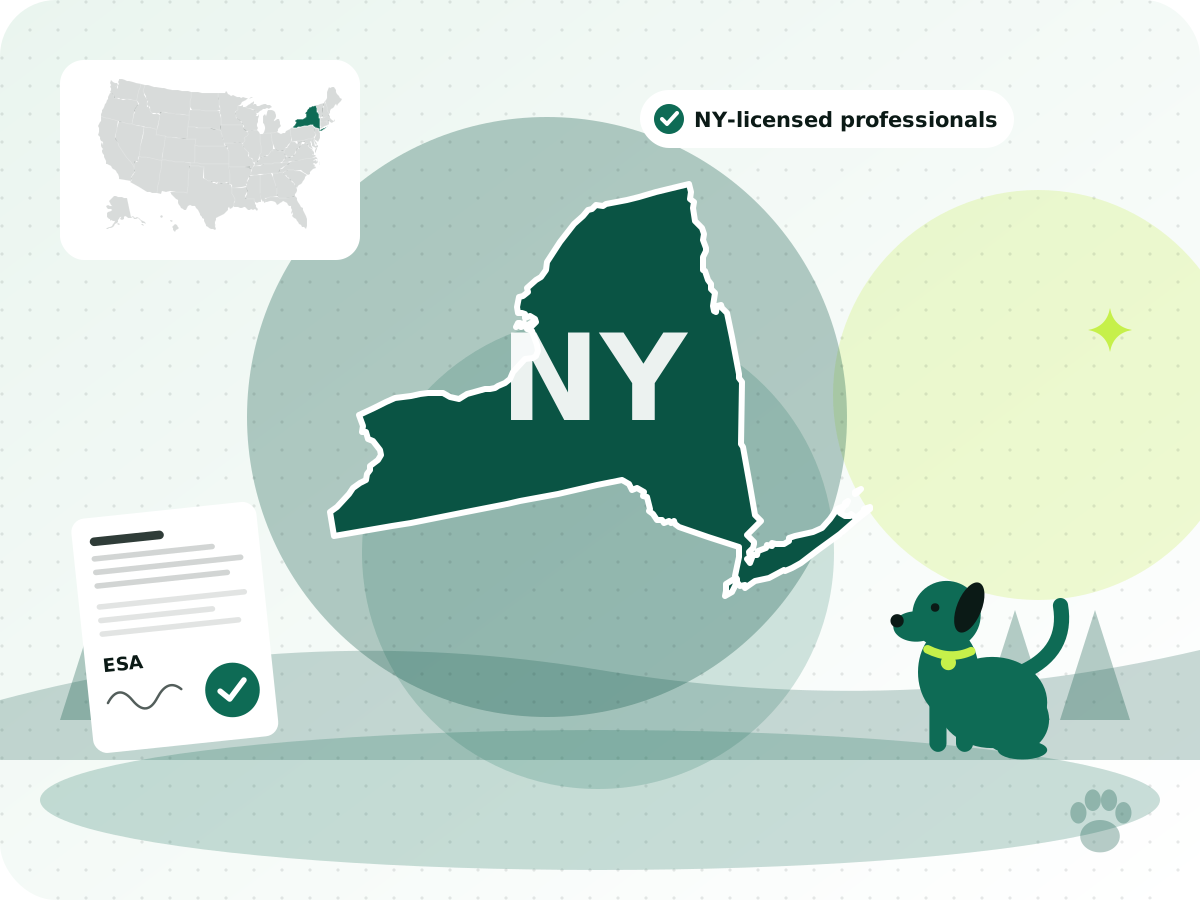
The New York State Human Rights Law (Executive Law, Article 15, including §296) bars housing discrimination based on disability throughout the state, from Long Island to the North Country. It requires housing providers to make reasonable accommodations in rules and policies when needed for a person with a disability to use and enjoy their home, which can include allowing an emotional support animal in a building with a no-pets policy.
Complaints are handled by the New York State Division of Human Rights (DHR), which has regional offices across the state. DHR regulations (9 NYCRR §466.15) also require housing providers to give current and prospective tenants written notice of their right to request reasonable accommodations and modifications, and that notice describes allowing an animal when a healthcare provider documents that it helps with the tenant's disability. New York City residents also have the city's own Human Rights Law and Commission, which is covered on our separate NYC page.
A 2026 change to know about: on May 22, 2026, HUD issued an enforcement memo confirming the withdrawal of its 2020 assistance-animal guidance (FHEO-2020-01) and stating that HUD will focus federal cases on animals trained to perform disability-related tasks. That memo did not amend the federal Fair Housing Act, and it does not change the New York State Human Rights Law. Tenants can still bring state claims through DHR or in court.
New York does not currently have an enacted statute, like California's AB 468, that imposes a waiting period or a minimum treatment relationship before an ESA letter can be written. Bills to add ESA documentation rules and penalties have been introduced in Albany, such as Senate Bill S9086 in 2026, but as of our latest review that bill was still in committee and is not law. If your New York-licensed mental health professional approves your request, your letter can be issued the same day.
New York does penalize certain service dog misrepresentation. Agriculture and Markets Law §118 makes it a violation to knowingly put a false or improper tag on a dog identifying it as a guide, service, therapy or hearing dog. Fines start at $25, and repeat violations within five years can bring a fine of at least $100, up to 15 days in jail, or both. That is one more reason never to dress an ESA up as a service dog.
A strong ESA letter from a New York mental health professional includes the mental health professional's name, license type and New York license number, the date, confirmation that you have a disability and a disability-related need for the animal, and contact information so the landlord can verify the letter. It does not need to state your diagnosis, and we do not disclose it.
Housing outside New York City looks very different from Manhattan high-rises. Buffalo, Rochester and Syracuse have a lot of older two-family homes and owner-occupied duplexes. Keep in mind that some small owner-occupied buildings are exempt from parts of fair housing law, so ask whether your building is covered before you assume a denial is unlawful. Westchester and Long Island have many co-ops and condominiums whose boards have their own pet rules, and those boards are still expected to consider accommodation requests from residents with disabilities.
New York is also a college state. Cornell and Ithaca College in Ithaca, the University at Buffalo, Syracuse University, the University of Rochester, the University at Albany and dozens of SUNY campuses each have their own process for animals in residence halls. Start the request with the campus disability or accessibility office well before move-in.
Fort Drum near Watertown and West Point in the Hudson Valley mean many renters live in or near military housing with its own policies. In the Adirondacks, Catskills and Finger Lakes, many rentals are seasonal cabins or vacation properties, and short-term vacation stays are generally treated differently from a lease on your home. Winters from Buffalo to Plattsburgh are long and snowy, so plan for leashed walks on icy sidewalks and indoor exercise for your animal.
New York's Civil Rights Law and the federal ADA protect people with disabilities who use trained guide, hearing and service dogs in public places. A psychiatric service dog is individually trained to perform tasks related to a mental health disability, for example interrupting dissociation or retrieving medication. The dog's public access comes from that training, not from any letter or registration.
A PSD letter from a New York-licensed mental health professional confirms your disability-related need for a trained service dog. It can support housing requests and help you complete the U.S. Department of Transportation Service Animal Air Transportation Form for flights out of airports like Buffalo Niagara, Albany or Syracuse Hancock. Emotional support animals have not been accepted as service animals on U.S. airlines since 2021.
If a housing provider refuses a reasonable accommodation without a valid reason, you can contact New York State Division of Human Rights, a local fair housing organization, or a housing attorney. Deadlines apply, so act promptly.
Last reviewed: October 9, 2026. Laws change; this page is general information, not legal advice.
There is no official national ESA registry, and online “registrations,” ID cards and certificates carry no legal weight. Registering your emotional support animal with your housing provider means giving them reliable documentation and a written accommodation request.
Every ESA evaluation for New York residents is completed by a mental health professional licensed in the patient’s state, after a genuine telehealth evaluation.
Medical Doctor (M.D.)
Physician on our team who completes ESA evaluations and helps patients understand how their letter works for housing.
Mental health professionalMedical Doctor (M.D.)
Physician on our team who completes ESA evaluations and explains each patient's documentation and next steps clearly.
Mental health professionalEach pin sits on the city’s real location, and each list entry shows the outline of its county. Because the visit happens by video or phone, the NY-licensed professional you meet can help you just the same in Buffalo as in Utica, or anywhere in between.
The New York State Human Rights Law (Executive Law Article 15) prohibits housing discrimination based on disability statewide and requires reasonable accommodations. The federal Fair Housing Act also applies.
No. HUD's May 22, 2026 memo changed how HUD itself enforces federal law and confirmed its 2020 guidance had been withdrawn, but it did not amend the Fair Housing Act or New York's Human Rights Law. New Yorkers can still pursue state claims through the Division of Human Rights or in court.
DHR accepts complaints online, by mail and at its regional offices around the state. Gather your accommodation request, your ESA letter and the landlord's response, and file promptly because there are deadlines.
No enacted New York law requires a waiting period or minimum treatment relationship. A 2026 Senate bill (S9086) proposed new ESA documentation rules, but it was still in committee when we last checked. Once a New York-licensed mental health professional approves you, your letter can be delivered the same day.
Yes. Division of Human Rights regulations (9 NYCRR §466.15) require housing providers to give tenants written notice of their right to request reasonable accommodations and modifications for a disability.
Agriculture and Markets Law §118 makes it a violation to knowingly affix a false tag identifying a dog as a guide, service, therapy or hearing dog. Fines start at $25, and repeat violations can bring a fine of at least $100 and up to 15 days in jail. ESAs should never be presented as service dogs.
Yes. Co-op and condo boards are generally covered by fair housing law and must consider reasonable accommodation requests from residents with disabilities. Submit your request in writing with your mental health professional's letter.
Each college sets its own process for animals in residence halls, usually through the disability services office. Your letter is useful documentation, but you will need to follow the school's application steps and timelines.
Some small owner-occupied buildings are exempt from parts of fair housing law, so coverage depends on the specific property. If you are unsure, contact the Division of Human Rights or a local fair housing organization before you sign a lease.
Once a housing provider approves an animal as a disability accommodation, it should not charge pet rent, pet fees or pet deposits for it. You remain responsible for any actual damage the animal causes.
Not as a matter of right. ESAs have no public access rights in New York; only trained service dogs do. A business may choose to welcome pets, but it is not required to.
An ESA letter supports a housing accommodation for an animal that helps with your disability through its presence. A PSD letter documents your need for a dog individually trained to perform psychiatric tasks; the training, not the letter, is what gives public access.
An ESA letter is $129 for up to two animals and $199 for three or more. Every evaluation comes with a full refund if the mental health professional determines you don't qualify.
No. Your letter confirms a disability and a disability-related need without naming a diagnosis, and we never disclose it to landlords.
Pick a time that suits you; booking is open 24/7.
About 10 minutes of questions about how you’ve been feeling.
Video or phone. Your signed letter by email right after the call, if you qualify.
From$129up to 2 animals · $199 for 3 or more
Book my evaluationCheck if I qualify firstA New York-licensed mental health professional makes the decision after a real evaluation. If you don’t qualify, you get a full refund.
Keep reading
Answer five quick questions to see whether an ESA evaluation is a good next step. It takes about a minute and nothing is saved.