Dr. Gaurav Patel, M.D.
Medical Doctor (M.D.)
Physician on our team who completes ESA evaluations and helps patients understand how their letter works for housing.
Mental health professionalFrom Albuquerque apartments to Las Cruces casitas and Santa Fe adobe rentals, New Mexicans with mental health conditions can ask landlords to make room for an emotional support animal. We connect you with an independent mental health professional licensed in New Mexico who can evaluate whether an ESA or psychiatric service dog letter is appropriate for you.
Medically reviewed by Dr. Johnathan Miller, M.D.Updated October 9, 2026
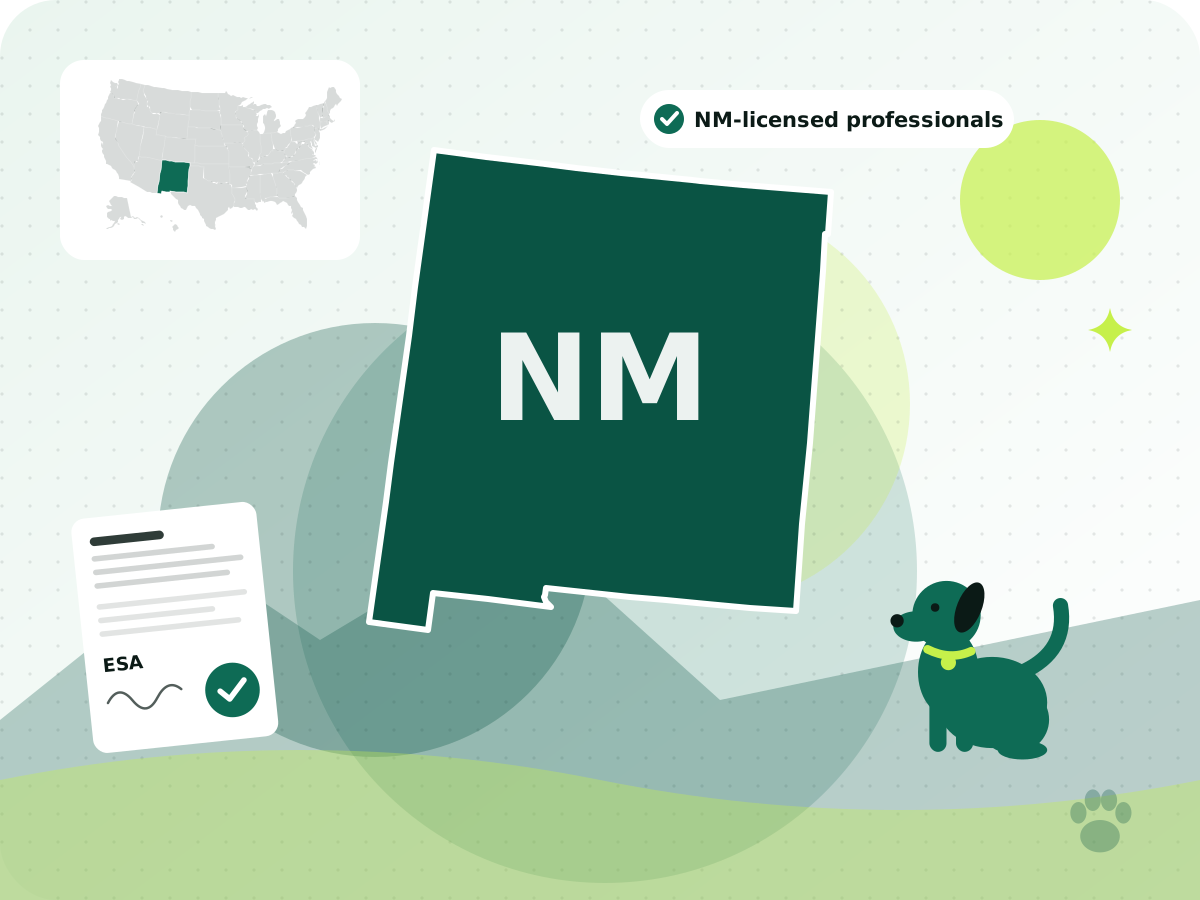
New Mexico's Human Rights Act (NMSA 1978, §28-1-1 et seq., with housing practices addressed in §28-1-7) prohibits discrimination in the sale and rental of housing on the basis of physical or mental disability, alongside the federal Fair Housing Act. In practice, that means a tenant with a qualifying mental health condition can ask a housing provider to make a reasonable accommodation, such as waiving a no-pets rule, when the animal helps with symptoms of the disability.
State complaints are handled by the Human Rights Bureau of the New Mexico Department of Workforce Solutions. Tenants can also go to HUD or to court. If a landlord refuses an accommodation, write down the dates, keep copies of every email and letter, and contact the Bureau promptly, because discrimination complaints have filing deadlines.
An important 2026 update: on May 22, 2026, HUD's Office of Fair Housing and Equal Opportunity issued an enforcement memo confirming it had withdrawn its 2020 assistance-animal guidance (FHEO-2020-01) and said HUD will find reasonable cause in federal cases only where the animal is individually trained to perform disability-related tasks. The Fair Housing Act itself was not amended, private lawsuits remain available, and state laws such as New Mexico's Human Rights Act are not changed by a federal memo. Expect some landlords to ask more questions about emotional support animals, and make sure your documentation comes from a real clinical evaluation.
We did not find a New Mexico statute that sets special documentation rules, waiting periods or client-relationship requirements for emotional support animal letters, the way California, Iowa or Montana do. Housing requests in New Mexico are generally evaluated under the Human Rights Act and the federal Fair Housing Act. There is no state waiting period, so if your New Mexico-licensed mental health professional approves your request, your letter can be issued the same day.
A useful ESA letter is written on the mental health professional's letterhead and includes their license type, license number and the state of licensure (New Mexico), the date, a statement that you have a disability as defined by fair housing law, and an explanation that the animal helps with symptoms related to that disability. It does not need to name your diagnosis, and we never share your diagnosis with your landlord.
New Mexico's Service Animal Act (NMSA 1978, §28-11-1 et seq.) defines a qualified service animal as a dog or miniature horse trained to work or perform tasks for a person with a disability, and it expressly excludes emotional support, comfort and therapy animals. Under §28-11-6, knowingly presenting an animal as a qualified service animal when it does not meet that definition is a misdemeanor. In short: an ESA letter is a housing document, and an ESA should never be passed off as a service dog in a restaurant or store.
New Mexico's rental market is spread out. Albuquerque and Rio Rancho have large apartment complexes run by professional management companies that usually have written accommodation procedures. Santa Fe has many older adobe casitas, guesthouses and owner-managed duplexes, and Taos and Ruidoso have seasonal and vacation rentals. Short-term vacation rentals generally are not treated the same as a residence, so an ESA letter is most useful for a home or apartment where you actually live.
Students are another big group. The University of New Mexico in Albuquerque, New Mexico State University in Las Cruces and New Mexico Tech in Socorro each have their own process for animals in residence halls, usually through the campus accessibility or disability services office. Apply early, since housing assignments fill up before the fall semester.
The state is also home to Kirtland, Holloman and Cannon Air Force Bases and White Sands Missile Range, so many renters in Albuquerque, Alamogordo and Clovis live in privatized military housing that has its own animal policies. Much of New Mexico also includes tribal lands and pueblos, where housing can be governed by tribal housing authorities and different rules may apply, so ask the housing office how it handles accommodation requests. Finally, think about the climate: summer heat in Las Cruces and Carlsbad and cold winter nights in Farmington and Los Alamos matter when you plan for your animal's care.
A psychiatric service dog (PSD) is different from an ESA. It is a dog that has been individually trained to perform specific tasks for a person with a psychiatric disability, such as interrupting panic attacks, providing deep pressure therapy or waking a handler from nightmares. Under the ADA and New Mexico's Service Animal Act, public access rights come from that training, not from a letter, vest or ID card.
A PSD letter from a licensed mental health professional documents that you have a qualifying disability and a need for a trained service dog. It can help with housing requests and with the U.S. Department of Transportation Service Animal Air Transportation Form that airlines may require. Since 2021, U.S. airlines are not required to accept emotional support animals, so only trained service dogs fly in the cabin as service animals.
If a housing provider refuses a reasonable accommodation without a valid reason, you can contact New Mexico Department of Workforce Solutions, Human Rights Bureau, a local fair housing organization, or a housing attorney. Deadlines apply, so act promptly.
Last reviewed: October 9, 2026. Laws change; this page is general information, not legal advice.
There is no official national ESA registry, and online “registrations,” ID cards and certificates carry no legal weight. Registering your emotional support animal with your housing provider means giving them reliable documentation and a written accommodation request.
Every ESA evaluation for New Mexico residents is completed by a mental health professional licensed in the patient’s state, after a genuine telehealth evaluation.
Medical Doctor (M.D.)
Physician on our team who completes ESA evaluations and helps patients understand how their letter works for housing.
Mental health professionalMedical Doctor (M.D.)
Physician on our team who completes ESA evaluations and explains each patient's documentation and next steps clearly.
Mental health professionalEach pin sits on the city’s real location, and each list entry shows the outline of its county. Because the visit happens by video or phone, the NM-licensed professional you meet can help you just the same in Albuquerque as in Hobbs, or anywhere in between.
The New Mexico Human Rights Act (NMSA 1978, §28-1-1 et seq.) prohibits housing discrimination based on physical or mental disability, and the federal Fair Housing Act applies too. Together they let tenants with disabilities ask for reasonable accommodations, such as an exception to a no-pets policy.
You can contact the Human Rights Bureau of the New Mexico Department of Workforce Solutions. You may also file with HUD or consult a fair housing attorney. Keep records of your request and the landlord's response, and act promptly because complaints have deadlines.
We did not find any New Mexico law requiring a waiting period or minimum treatment relationship before an ESA letter. If your New Mexico-licensed mental health professional approves you, the letter can be delivered the same day.
Yes. Under NMSA §28-11-6, knowingly presenting an animal as a qualified service animal when it does not meet the legal definition is a misdemeanor. New Mexico's Service Animal Act specifically excludes emotional support animals from that definition.
No. Emotional support animals do not have public access rights under the ADA or New Mexico's Service Animal Act. Only trained service dogs (and in some cases miniature horses) can go into places where pets are not allowed.
HUD said it will focus federal enforcement on animals trained to perform disability-related tasks and confirmed its 2020 ESA guidance had been withdrawn. The Fair Housing Act and New Mexico's Human Rights Act were not changed by that memo, but some landlords may now scrutinize ESA requests more closely, so solid documentation matters.
Possibly. The University of New Mexico and New Mexico State University each handle animal requests for residence halls through their own accessibility or disability services process. Contact that office early and ask what documentation they accept.
Once a housing provider approves your animal as a disability accommodation, it should not charge pet rent, pet fees or a pet deposit for that animal. You are still responsible for any actual damage your animal causes, just like any other tenant.
Privatized military housing has its own policies and accommodation procedures. An ESA letter documents your disability-related need, but you will need to follow the housing office's process, so ask them for their reasonable accommodation form.
Housing on tribal lands may be governed by a tribal housing authority and tribal law, and federal housing programs can add their own rules. Ask the housing office directly how it handles disability accommodation requests for animals.
Yes, in limited situations: if the specific animal poses a direct threat to others' safety, would cause substantial damage that cannot be reduced, would create an undue financial or administrative burden, or the housing is exempt (for example, some owner-occupied buildings with four or fewer units). A landlord cannot deny you just because of a general no-pets rule.
No. The letter confirms you have a disability and a disability-related need for the animal, but it does not need to name your diagnosis. We never disclose your diagnosis to landlords.
An ESA letter for housing is $129 and covers up to two animals; a letter for three or more animals is $199. If the mental health professional finds you do not qualify, you receive a full refund.
No. There is no official ESA registry in New Mexico or anywhere in the U.S., and certificates, vests and ID cards do not give legal rights. What matters is a letter from a licensed mental health professional who has evaluated you.
Pick a time that suits you; booking is open 24/7.
About 10 minutes of questions about how you’ve been feeling.
Video or phone. Your signed letter by email right after the call, if you qualify.
From$129up to 2 animals · $199 for 3 or more
Book my evaluationCheck if I qualify firstA New Mexico-licensed mental health professional makes the decision after a real evaluation. If you don’t qualify, you get a full refund.
Keep reading
Answer five quick questions to see whether an ESA evaluation is a good next step. It takes about a minute and nothing is saved.